心明师对董阳孜书法巨作点评
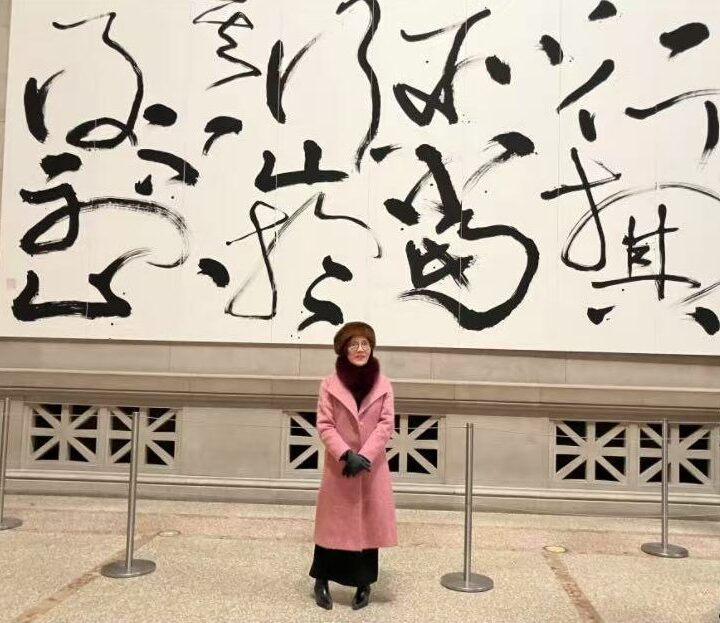
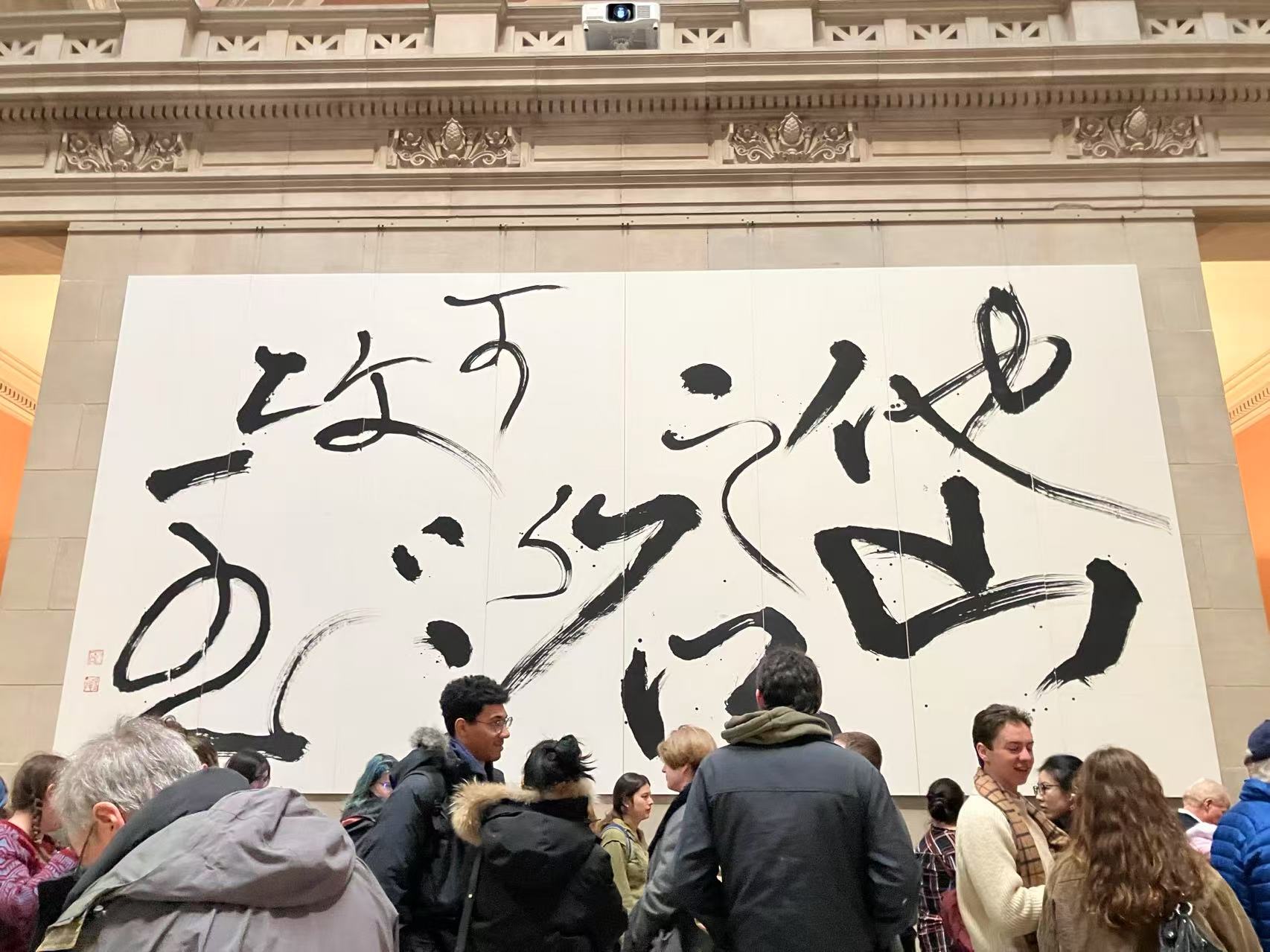
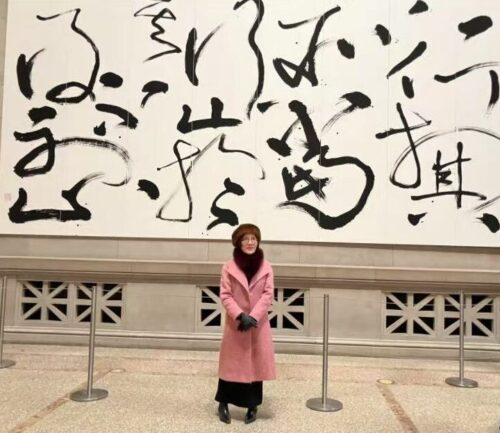
心明师对大都会博物馆近日展出的董阳孜书法巨作点评:- “书法是中国艺术之父,好比建筑是西方艺术之父,目前中外学者彼此在艺术研究的重点,多数关注在每个时期名家与其作品产生的背景,或宗派的传承。甚少从历史考古的角度寻找书学天真心脉的源流,天真心脉的源流,是作为中国艺术之父的”书学真气”。禅宗有千年保鲜一朵花之传承,中国书法艺术,也要千年壮旺一真气《摘自心明书学大脚印2》这需要有一代宗师清道人李瑞清那样三千年书学了然心目,各体皆备,各体皆精。然后能心手双畅。细看书法家董阳孜的作品,把人伦教化意义,深藏不露于生死之笔间,所谓生笔:守神专一 意在笔先是也。”他山之石可以攻玉”对于中国人来说太耳熟能详的诗句,史上有无数名家大笔,在布局上几乎都排列整齐,界笔直尺毫厘不差,不过是给人以警句功能,死笔满壁而已。董巧妙运用中国文字在方块空间书写时书画同体而异名,以三维视觉空间,放怀点曵伒佛,例如【之石字图】,虬髯云鬓,例如【玉以字图】,披离旷逸五音俱全。更可贵的是两幅字的运墨,了知其五色妙用,故使气脉通连,毫无死滞之笔,如此磅礴的千秋功影,令人倾倒。董大师耄耋之年,笔力仍能扛千斤鼎,非饱食终日陋巷之人所能为也。”
Xinming’s commentary on Dong Yangzi’s monumental massive calligraphy art recently exhibited at the Metropolitan Museum:
“Calligraphy is the ‘father of Chinese art,’ much like architecture is the ‘father of Western art.’ At present, scholars both in and outside China tend to focus their art research on the backgrounds, schools and inheritance of the notable figures in certain periods. Rarely does anyone trace the origin of calligraphy’s pure, natural lineage from a historical and archaeological perspective.
This lineage of natural purity is the ‘true energy of calligraphy’ that underpins it as the father of Chinese art. Just as Zen Buddhism has preserved a single flower’s legacy for a thousand years, so too must Chinese calligraphy remain robust for a thousand years, sustaining this one vital spirit (excerpted from ‘Xinming Sinological Studies and Big Footprints II). To achieve this requires the breadth of insight possessed by a grand master such as the Master Li Ruiqing, who commanded three thousand years of calligraphic knowledge, mastering all styles to perfection, and therefore, mind and hand moved in complete unison.
When examining Dong Yangzi’s work closely, one sees how she subtly conceals profound humanity and moral meaning within the ‘life and death’ of each brushstroke. That is what is meant by a ‘living stroke’: maintaining utmost concentration, letting intent guide the brush before it even touches the paper.
The phrase “The stone of another mountain can polish jade” is so familiar to the Chinese that throughout history, countless great calligraphers have written it. Yet in most layouts, the characters are arranged neatly and precisely, the lines measured perfectly, serving as nothing more than an admonishing motto: lifeless strokes filling the wall.
By contrast, Dong skillfully employs Chinese characters within the squared space, uniting writing and painting as one in three-dimensional visual form. She freely scatters her strokes, take for instance, the “Stone” character composition, where the brush lines twist and curl like whiskers, or the “Jade” character composition, lofty and unrestrained, encompassing all the five tonalities. Even more remarkable is her handling of ink in these two pieces; she understands the subtle use of what we might call ‘five colors/shades of ink,’ allowing the energy to flow with no sluggish or dead brushstrokes. Such grand, timeless artistry is truly awe-inspiring.
Even at her senior age, Grandmaster Dong’s brush still wields the power to lift a cauldron, a feat impossible for one who merely idles away each day in some humble alley.”