艺术展及代表作 | Exhibitions and Notable Art Pieces
A portrait of Sharples

Sir Pita Russell Sharples KNZM CBE is a New Zealand Māori academic and politician, who was a co-leader of the Māori Party from 2004 to 2013, and a minister outside Cabinet in the National Party-led government from 2008 to 2014.
Sharples led Haka dance experts and Maori language and culture experts to visit Xinming. He highly praised Xinming’s exploration and contribution to Maori language and writing. When he watched Xinming’s series of works “Ah! Pacific, please give my words back”, he said: “It’s really exciting. Xinming’s works should not only be seen by New Zealanders, but also by people around the world!”
A portrait of Sharples was presented to him, created by Xinming.


(Sir Sharples and Xinming)
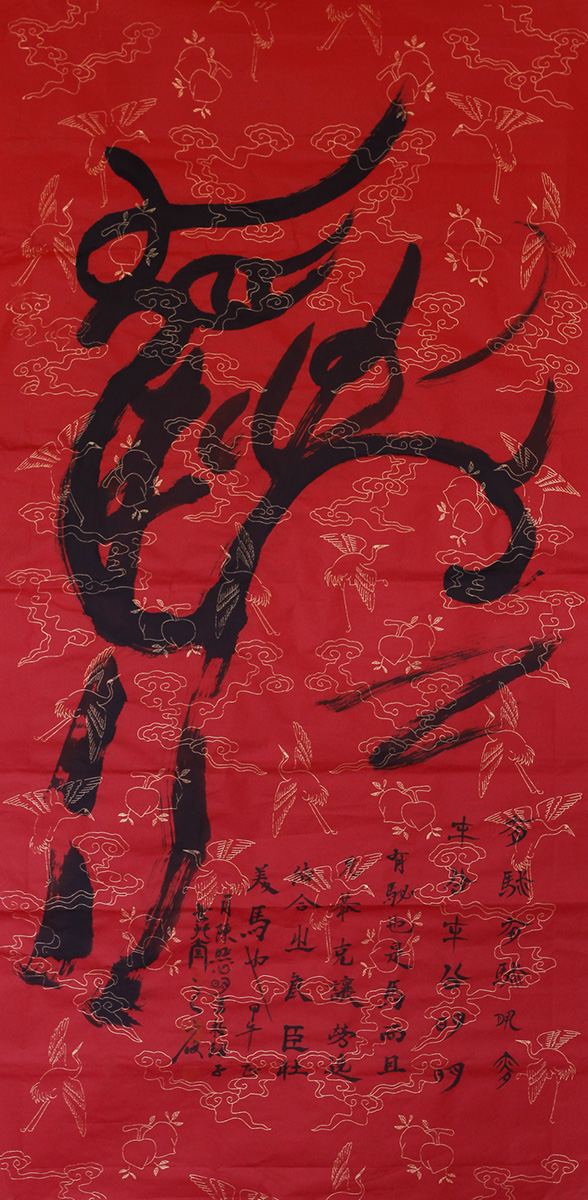
Bai Fu, More than you wish

Xinming’s artwork “Bai Fu, More than you wish” was collected by Tao Wang Ph.D., Pritzker Chair of the Arts of Asia and Executive director of initiatives in Asia and curator of Chinese Art at the Art Institute of Chicago.
Rewi Alley Exhibition 2017


Rewi Alley Exhibition, Xinming Chen
Aotea Center, 50 Mayoral Drive, Auckland, New Zealand
March 19, 2017

(Xinming at the exhibition with her students)
Rhythm, NZ Chinese Maori Arts Exhibition 2017


Rhythm, NZ Chinese Maori Arts Exhibition, Xinming Chen
New Asia Book and Cultural Center, 308 Ti Rakau Drive, East Tamaki, NZ
March 22 2017


Art and Objects, exhibits in New Zealand Parliament

Art and Objects at Parliament, Xinming Chen
NZ Parliament Building, 1 Molesworth St, Wellington, New Zealand
November 29 2012


“丹心雄鹰传承与创新、艺术与幻觉”世界巡展之旅
第一篇:宗匠心法传承的脚印
“丹心雄鹰传承与创新、艺术与幻觉世界巡展之旅”是陈照心明作为宗匠脚印学派创始人以及临川李氏(清道人李瑞清)金石书画学派“第四代学者艺术家”的一次历史性的展出;也是一次“姐妹智慧与艺术人生”共同完成的境界之作。更是“传承前辈心法,对接南太平洋的本土文化,开创当代书法艺术新风格的文化艺术之旅。这是一次纯净之旅,也是向世人展露中国文化艺术深根之旅。心明与子玄希望通过这次“世界巡展”让祖国和世界人民为中华真正有 “魅力根”的艺术而燃烧激情。并形成美好的丹心雄鹰文化思潮:“崇尚艺术精神的教化、抑制贪婪与蛮性的释放”。谱写二十一世纪允恭克让,百姓平安的礼乐艺术新章。
展出四组精彩内容:
(一)宗匠心法传承的脚印
展示心明沿着宗匠心法的脚印,神游三代,上溯史前“图符、气符、纹饰 、甲骨钟鼎,下拾秦汉六朝简帛碑版,纳千年书法于笔下。
展出将包括:
纳符入篆的有《毛公鼎》《大盂鼎》《散氏盘》《齐侯壶》
纳篆入简的有《心明书美丽清华简》
纳简入碑的有《石门颂》《张迁碑》《西狭颂》《石门铭》
纳碑入贴的有《玉斧》《裴将军》《龙》《喋喋小吏》等
先贤李瑞清主张学书从周钟鼎大篆入手 ;李健从甲骨文入门。陈照心明在他们的基础上向夏代文明以前的宇宙螺旋气场符号寻觅书学源流的始祖。把夏商周三代书法脉络按地域、国别,分别写在作品的题跋中,使其有上承下启的作用。是艺术与学术嘉惠年轻一代的力作。

Exhibition Tradition and Innovation, Art and Illusion
The Tradition and Innovation, Art and Illusion exhibition is an international exhibition that follows the artistic style of the Historical Jinshi art and culture academy. Artist Xinming, is a fourth generation calligraphy master, following the grand masters style, stylized by the first great master Li Rui Qing from the late Qing Dynasty, she also is the founder of the great masters footprint, an academic school of Chinese culture and Calligraphy which follows all of the Great historical masters of Chinese art and history.
The exhibition is a collaborative piece combining both Xinming and her sister Zixuan’s wisdom to reach a high realm of enlightenment in the art. The style of the art is not just following the traditional great master’s style, but also connects with the contemporary art of the South Pacific, as it is paving the way of a new contemporary calligraphic style. The exhibition carries a true and pure purpose, and reveals to the world and to China the deep cultural roots of Chinese calligraphy.
Xinming and Zixuan hope that with this exhibition they can showcase the true fine cultural art of China, and they also hope to kindle an interest and passion in Chinese Calligraphy. Through this exhibition they hope to make a surge of self-cultivation and enlightenment so that any controlling and selfish natures of humankind can be improved and bettered, composing a sense of generosity and selflessness that can be universally felt by people worldwide in the 21st century
Part One
Great Master’s Footprints – Teaching exhibition, exploring the history of development of Jinshi calligraphy and painting academic stream.
In this exhibition, Xinming will show the great Chinese prehistoric civilization to people and the mysterious symbols expressed in their calligraphy. She hopes to promote a broader understanding a people whose writing brought a crucial element to their spiritual journey; to share the spiritual wealth of a civilization.
Xinming will show work that is akin to the style of traditional Chinese calligraphers: using hanging scrolls, paired couplets, and hand scroll. Her work in this area is heavily dependent upon a lifetime of study and research in ancient Chinese carved stele and bronze inscriptions.

Eagle Spirit
Our desire is for Chinese culture to surge through the world, so that human nature can be improved to be more loving and generous.
丹心雄鹰文化思潮“崇尚艺术精神的教化、抑制贪婪与蛮性的释放”

上图: 临仲乾大师玉针篆《道家秘文》
下图: 汉碑 心明作〈渔家傲 鹤寿〉
中图一: 行书 〈珊瑚吉金〉心明续仲乾大师所失遗墨下联
中图二: 节临清华简〈保训〉
中图三: 临西蜀马德昭〈魁鳌〉

左: 《楚公钟》 右: 《曾子簠》
第二篇:南太平洋的脚印
(二)南太平洋的脚印
心明艺术的创作核心是通过研习历代书法文化大家的心法,把中华文化和南太平洋本土文化以平等尊崇的方式对接起来。所谓的平等尊崇是指,她作为新西兰华裔,成长在这片土地,并形成了新的世界观,与此同时中国文化艺术精灵伴随着她走过了大半个艺术人生。然而两个文化的角逐在时代变迁的潮流中并没有被分化削弱,而是通过心明的艺术情怀使两者更为融合扩展。 她指出:毛利文化和中国传统文化在其崇敬自然与传统之间是没有国界的;也没有高低贵贱之分; 其情感与秩序更是一脉相承。
在创作过程中,这种艺术的结合形式也体现在她与妹妹子玄的合作上,她们各怀绝技,有独特的专业知识和观点。心明在每个作品的深层苦心运用了语言、形态、故事甚至意象层,绘制出象诗一般的乐章。子玄则挥舞手中的指挥棒,使乐章振奋、轻巧、灵魂飞升。此种迷人的调子穿透在每个作品中,使其充满了生命力。
以作品《江山岂止八百年》和 《玄鸟》为例,她尝试以书法的幻觉揭开毛利文化符号与两河文明尤其是夏商周三代文化符号的天然密码。作品画面都以文字和意象构成,既是原创,也是历史故事的再现。其书法线条,笔法,笔触唤起了一种振奋,即便文字看上去是生疏的,却有强烈的表现力。它与图像的互补互动组成了多层次的特质,宛如“绘画”的效果。画面强调了中国和毛利传统文化符号细节之间的视觉关系,并构成一个平衡的整体。心明在抽象中找到了其内在的语言,赋予了传统书法艺术蓬勃向上的新生。
Part Two
The South Pacific Footprints – Art and Illusion, the passion of jade culture, display works with some Māori pounamu pieces.

“Yu Song” calligraphy and symbol, 90cm x 175cm, mounted scroll
On the other hand, in essence she learned the ancient art of calligraphy and also combined with twenty years of teaching experience in the South Pacific, created a series of works inspired by jade (pounamu) culture in China and New Zealand, its powerful spiritual dimension occupies in two nation’s culture. It embodied Confucian virtues of wisdom, justice, compassion, purity and modesty. By comparing ancient Chinese symbols with Māori symbols, she extracts their essence and remixes them in an antiphonal style. Her development has caused a unique art form that expresses their philosophies, their desires for a better life as well as their reverence for nature. Her symbolic pattern of calligraphy reached the fantastic realm, it is new way of interpretation of modern art and what we called this is tradition and innovation; art and illusion.

“Kingdom Beyond 800 Years” – Hanging Scroll 190cm x 97cm.
Ink and colour on paper © chen zhaoxinming 2014 NZ
Kingdom Beyond 800 Years:
Taigong’s face with Moko Reimagined
Jiang Taigong is a popular name for Jiang Ziya, a statesman and strategist of King Wen, and later, young King Wu. He helped them overthrow the Shang Kingdom and establish the Zhou Dynasty which lasted 800 years.
Taigong was known as a fisherman who fished without hook or bait. He reasoned he would only catch fish that wanted to be caught. He had little luck until his eightieth birthday. It was then that King Wen found him.
Here in the painting, the ideals of benevolence and humanity are inset, not in a man, but in a hook (Hei Matau). These characters within the fish hook stand for the exceptional values of a family reflecting the values of a country.
Taigong’s facial designs are in reverence to the Moko. An expression of an aristocratic mark and a connection with a Māori sense of dignity. This cultural adoption is respectfully limited, with the designs being Zhou in nature.
江山岂止八百年
一家仁,一国仁。
题跋: “姜太公钓鱼愿者上钩” 所在的历史御今价值乃以君子“恭敬、撙节、退让” 之道为世界文明所存之道也。太公的良思神貌是否与毛利神人面部图腾相似,特以周青铜文饰示现太公威德。
注解: 姜太公原名吕尚,商末周初政治家、军事家和谋略家。生于公元前1210年农历八月初三。身怀绝技。八十岁仍没有寸功于家于国。商纣王无道,民不聊生。周文王有志救民于水火,求贤若渴,姜太公为求有情有义的明主。每日在渭水河边伸着鱼杆,没饵没钩地钓鱼。终于遇到周文王亲自将姜太公请上车接到都城拜为国师。路程约八百步,姜太公便推算出周之国祚约八百年,竟也成真。周文王大业未成身先死,太公珍惜与文王过命之交的“情同亲合”。辅助武王伐纣,建立周朝。于是就有一句歇后语:“太公钓鱼—愿者上钩”。
心明运用中国书法特有的心画,否决曾想用横势飞动的隶书笔法,而以小篆垂直圆劲的笔势,机智地把书法艺术圆笔的螺旋,与毛利文化符号玉鱼钩的宇宙螺旋,进行顺理成章的旋转与钩勒。用闪亮的金色篆出鱼钩“仁者无敌,的治国安邦的法宝。呼应姜太公面部所描绘出商周青铜器纹饰的神秘形象。全幅作品将两国人民史诗般的情怀用中国笔墨与毛利绿色和闐玉进行精心艺术处理,彰显中国书法远古”宇宙螺旋气场的心源。
每当心明创作接近尾声,心力和忍耐就要出毛病时,子玄的脚步声渐渐迫近。“给姜太公衣服加两笔重的,”心明习惯子玄挑刺,心里有点哼哼,手不情愿添了两笔。“看看,效果不就出来了!”子玄得意反问心明,心明说:“此种笔墨境界惟求读者观众来感受了”。

God Defends New Zealand
This relates to the jade culture in china, and how God has defended New Zealand by blessing this country with the gift of greenstone that is to be treasured by both the New Zealand people and by people around the world. The pattern of the character “寿shou” is a word meaning ‘long life ‘and is represented in the shape of a crane to portray long life and never-ending cycles. The national song at the top symbolizes the biculturalism of New Zealand and the gift the Māori have with bonding strong relationships between foreign countries such as China.
[天主保佑新西兰]符号书 93cm x 170cm 设色 中堂 甲午心明于子玄草堂以寿字写鹤喻意永恒 。

Jade Axe (Maori weapon) – Mounted scroll 67cm x 67cm Ink and colour on paper
Jade Axe
This is the jade axe that Zi Xuan uses to open chakras. It’s an instrument to help all beings.
Zi Xuan practices Dharma, using this tool to help people with questions in the spiritual dimension as they try to understand their inner spirit. She jokes with a smile:”Xinming, you people need your ass kicked!”
This poem speaks about the axe as an embodiment of energy. He who wields it is a source of vital, natural healing.
扶正玉斧
心明作七律一首: 云手无畏印三光,扶正祛邪玉斧忙,山中自有王者香,明月松间最宜长。
题跋: 毛利人民以玉斧护生,子玄方便舞此法器治病救人,余与众生乃欠揍之主。一笑。

Jade Disc (like Māori Kopae) – Hanging Scroll 200cm x 97cm Ink and colour on paper © chen zhaoxinming 2014 NZ
Jade Disc
Everything is made from the same basic elements like this piece of jade disc or ourselves as human beings.
We see a connection between Māori culture and our own in a similar sense to the two great rivers of China flowing together, carrying with it, our heritage.
This circular symbol carries our joint compassion and our “Chi”.
藏珍玉壁
心明用清华简书体作七律一首:一物从来有一身,一身从来有乾坤,两河文明今又见,德气同归壁藏珍。

The Heaven Bird- Hanging Scroll 173cm x 94cm Ink and colour on paper © chen zhaoxinming 2014 NZ
The Heaven Bird
This bird, from a set of Chinese mythology called “The Book of Songs”, is said to have borne the Shang Dynasty.
The base is the Māori symbol for “Bird” (Manaia-The Guardian Spirit) joined with Xinming’s interpretation of the ancient Chinese “Heaven Bird” in the form of a Chinese character.
Xinming likes to relate this bird to her own theories on how Māori culture seems to share very similar symbols. Perhaps they were descendants from a group of 250,000 who went missing in this Shang era. In this case, they too share a relationship with this Heaven Bird.
The two vertical characters “heaven” then “bird” live to the immediate right of the symbol. Here the juxtaposition reveals Xinming’s process of transforming text into illustration.
玄鸟
天命玄鸟,降而生商,宅殷土芒芒……
百禄是何。 “诗经” 商颂内容与历史吻合,汤之先为契,
无父而生,契母误吞燕卵而生契,古史传说与毛利玉鸟
时空对唱。 甲午心明作。
玄鸟之幻觉:
公元前1600年商朝灭夏 商之祖名“契“,是玄鸟的化身,在殷商文献《甲骨刻辞》(安阳殷墟花园庄甲骨第三片2003年)中已出现“玄鸟”二字的合文。心明一贯喜歡跨学科地博览群书,毛利人民对鸟神的崇拜正与殷商时期人们对太阳的崇拜是一样的。历史上传说的周武王伐纣,二十五万商朝人一下子消失在太平洋,或许他们就是太平洋诸岛毛利人、玛雅人、玻利西亚人—-的祖先。这种远古的文明居然在南太平洋毛利文化符号(Manaia) 的象征意义上找到了答案。心明兴奋极了,“玄”字与毛利神鸟合笔,以同时期的甲骨文书《诗经-商颂》清逸境远,使画面浸入人们的心魄,砰然抓住灵魂飞升在两国文化史诗般的浪漫情怀之中。

Harmony (Pikorua) – Hanging Scroll 176cm x 64cm Ink and colour on paper © chen zhaoxinming 2014 NZ
Harmony
To celebrate the 60th anniversary of the New Zealand China Friendship Society Xinming has created the Harmony which inspired George Andrews from the Society to give Xinming’s his best wishes for the friendship between China and New Zealand.
The characters on the green shape are written in the Dayuding engraving font style, which means ‘harmony’ in English.
The verse is a blessing for the special relationship between China and New Zealand to continue for generations to come.
以<大盂鼎>风格书写“一团和气”。 心明为中国人民的老朋友新中友协副主席安德鲁乔治先生有感而作, 以庆祝新中友好协会建会六十周年,祝愿两国友谊长存。
释文:惟六十年新中友好吉显先贤厥德。 其和合共宝 孙孙子子万年永。

More Than You Wish For- Baifu Painting(Hei Matau) © chen zhaoxinming 2014 NZ
Hanging Scroll 173cm x 94cm Ink and colour on paper
More Than You Wish For- Baifu Painting(Hei Matau)
A Baifu Painting consists of one hundred different styles of the word “Fu” (fulfillment). It is an expression of optimism and hope, for a better future.
Extending into the hook are characters of the style of “Da Yu Ding”. This style of writing was originally cast on to bronze in the Western Zhou period.(1122 – 255 B.C.). These characters exude a metallic strength worthy of supporting such an impressive pendant. The curvature of the last character effectively ‘finishes off’ the Matau, lending a beautiful continuity between the two cultures.
年年有余百福图(用大盂鼎笔法)
题跋:南太平洋书学脚印

Da Yu Ding Style 周青铜器 大盂鼎 与 铭文

“Tiki play fights — Self improvement” © chen zhaoxinming 2014 NZ
Tiki Play Fights
The purpose of fighting is for self-improvement. Hei-tiki represents the first man and the painting portrays a hope that a new man can be produced born without hate and greed, a man that is pure honest and loyal. This tiki wants to be both strong and to cultivate himself in a peaceful way, so it represents a discourse and peaceful discussion of the way to better man.
《完美帝基》
喋喋小吏手摇旗,天翻地覆踏虎皮,
我游太仓胸一粒,地宁天清有帝基。
第三篇:般若书学的脚印
(三)般若书学的脚印
心明为配合妹妹子玄以佛道儒的智慧,为中外人士解决生命与身心的难题。创作吉祥符号书,此乃姐妹俩天作之合。尤其更获得伟大金刚力加持的巨 幅表现显密圆融的”般若书法”作品《心经》《金刚经》《观音心咒》扇面《阿字观》《百药》《顕寿》《圣经诗篇》《觉竹》等,让参观者有机会得大金刚力的加持,从而体会觉者无上慈悲和智慧。
Part Three
The Wise Footprints – To access higher spiritual meaning of traditional Chinese philosophies through Xinming’s art.

显密圆融《心经》 《禅心》

Written in the Orchid
“觉兰” 千秋王者香悟空性
一切有为法,如梦幻泡影,如露亦如电,应作如是观。

Written in the leave
觉竹
题跋: 不怕念起, 只恐觉迟。
Enlightenment
Blossom Orchid Bamboo and Chrysanthemum symbolises the four gentlemen. It is traditionally a formal art form in Chinese culture, they enjoy humane characteristics like self-reliance, elegant in look but light in taste, and never bow before power. Therefore, since ancient times, these four plants have become spiritual symbols of Chinese who used them to reflect their sentiments and ideals. But in Xinming‘s way it is unique because she uses the spiritual philosophical thinking and applies them to the words in the painting to create a higher meaning to the art. You can see the shape of the Buddha for example here, relate to pure and Buddhist mind. Orchid means the combination of Taoism Buddhism and Confucian philosophy to express a higher spiritual meaning, so the technique of the art form is unique.
觉君子四屏
八大山人的用墨功夫看似无法无天,实际深得晋人淡远韵致。历代所有名家无人敢如此用笔。心明的《觉君子四屏》虽无八大山人的笔墨绝技,却有八大山人的胆识,巧妙地将佛心、道心、儒心写花写叶。又以篆隶简帛笔触巧布四君子之势:渴笔的觉竹前后相随,入凌云处叶子以浓墨写临风之态,对比鲜明地衬托“觉破”之情。写觉梅以《毛公鼎》“先”字布枝垂干,不经意中得天地俯仰之势,虽写梅花情态各异,皆一一担当言语之职。用笔简远。“佛”字花更呈淡雅脱俗。觉兰根叶离尘,花写“千秋王者香悟空性”之语。笔法清晖洞达。写了 五六张,一有俗气。马上就被子玄否决。清超出自二王兰心慧气相运。觉菊生长在悬崖峭壁也不失君子的峻整不凡。用墨浓淡与前三幅相反,花淡叶浓隐逸中迎曦。《觉君子四屏》艺术的幻觉实实在在存活心明笔下。
第四篇:薪火相传的脚印
(四)薪火相传的脚印
宗匠心法薪火相传, 将展出部分始终不改其志,一心追随心明老师倡导的“国学与书学童子功双向训练的学生作品,包括有: 符号书、甲骨文,钟鼎文、真书等,展现临川李氏书学六步心法:立品、明源流、识派别、 窥堂奥、喻笔法、解会通。重点展示心明课徒的各体书法。诗文、 篆刻 、手稿等。
Part Four
The New Footprints – Student perform using brush and playing a traditional Chinese music instrument while Xinming performs writing calligraphy.

Respect for teachers Hanging Scroll 173cm x 94cm Ink and colour on paper
Respect for teachers: The big word means respect and shows a person bowing to the teacher. When you bow like this it is like holding the jade in your hands, so it relates to showing respect to the teacher.
执圭治德图
款识: 请业恭敬执圭治德,课徒高标化雨练鹤。
题跋: 敬字头上托一毛利人玉圭颇似门人弟子所执之礼欣写此图并记。心明于甲午.

金石书画学派的光辉传宗接代。

请业恭敬执圭治德,课徒高标化雨练鹤。