
出版物 | Publications
Calligraphic Symbols of the Universal Spiral Qi with Demonstrations (2023)
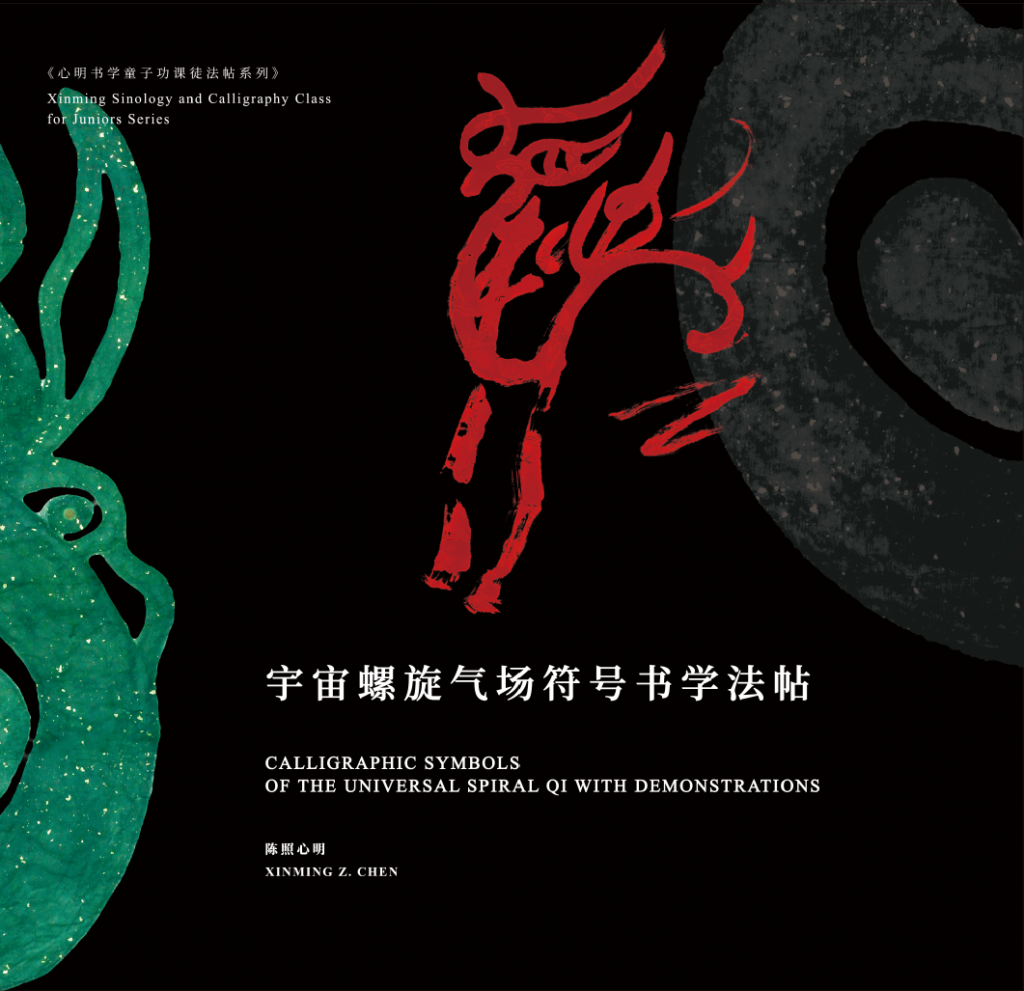
Chen, Xinming. Calligraphic Symbols of the Universal Spiral QI with Demonstrations. Mugen Tahi Press, 2023
Detailed introduction click HERE.
Collected by / 馆藏机构:
- Tsinghua University
- South China Normal University
- Beijing Normal University
- Beijing Mofa School
Research on Li Jian (2013)
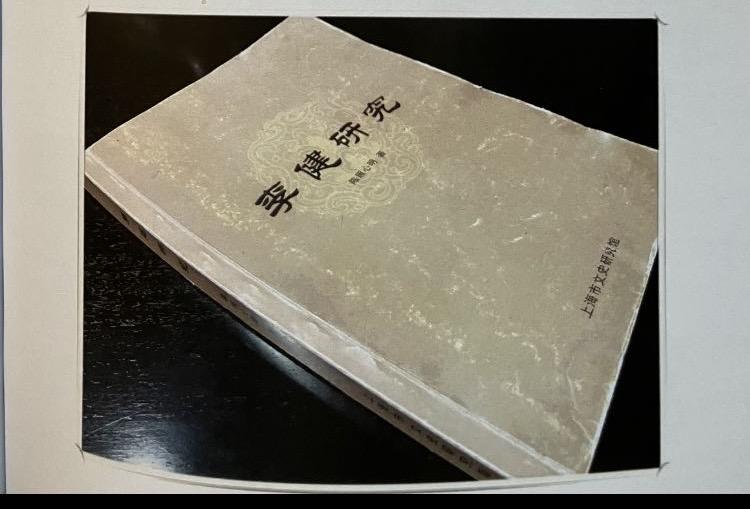
Chen, Xinming. Research on Li Jian. Shanghai Literature and History Research Institute, 2013
《李健研究》分为三个部分:一是对李健遗稿《书通》的导读;二是对李健书画篆刻作品的赏析;三是对李健诗文札记等著述的研究。
另有附录,录有李健生平年表、手稿墨迹、弟子风采等内容,也是重要的研究成果。陈照心明女士呕心沥血,十年磨一剑,及至现在,几经磨合,书稿初具雏形,即将付梓,但是我们仍有深深的遗憾。据了解,李健先生曾著有一部《中国书法史》,这是当年商务印书馆张元济董事长委托他撰写的,书稿既成,准备付印,结果纸样毁于“八·一三”日军侵华战火。李家尚留有一包校样和手稿,然而,后来这部文言文的书稿再也没有了出版的机会。“文革”中,手稿和样稿均被抄没,后来落实政策时,李健家属仅找回一小部分手稿,样稿和大部分手稿至今查无下落,这就为李健研究留下了一个重要的资料缺憾。
学术研究是没有尽头的,但是有价值的研究总要体现新意。或是新资料,或是新观点,或是新的研究方法。心明女士汇总了能够找到的李健先生的所有材料,提出了自己对李健先生在中国书法史上地位的评价,实属难能可贵。心明女士对中国书法艺术抱有神圣的景仰,对自己的研究对象更是充满崇敬,同时她又拥有翔实的资料,做到了图文并茂,并以严谨的学风和扎实的工作完成了这部《李健研究》。见其文如见其人,文风典雅清丽且沉稳踏实,让人钦佩不已。我们在对心明女士表示诚挚祝贺的同时,也希望她继续对中国书画艺术史的研究作出新贡献。
上述赘言,不足以表达对已故李健馆员的怀念,也不足以对陈照心明女士的研究作出全面的评价,权作对《李健研究》的推介罢了。
上海市文史研究馆馆长 沈祖炜
2013年12月
The research on Jian Li is in three parts: Part One is an introduction to Jian Li’s manuscript 《书通》; Part Two includes the appreciation and analysis of Jian Li’s calligraphies, paintings and seals; Part Three is on the research of the poems and works that Jian Li has written. Also included is a valuable Appendix covering a timeline of Jian Li’s life and photos of his manuscripts, as well as artworks created by his apprentices, which are also very important achievements. Over a ten year period Chen Zhao Xinming has researched and then written this book on Jian Li, which is now about to be published.
Regrettably however Jian Li had also written a book called The History of Chinese Calligraphy which had been commissioned by Yuanji Zhang, the former Chairman of the Board of the China Commercial Press. Jian Li had completed this book but just as it was about to be printed the Sino-Japan War broke out, and all the samples were destroyed during the subsequent Japanese invasion. The manuscripts in the Li family were therefore never published, as they were later confiscated during the Cultural Revolution. Although a small number of manuscripts were later retrieved, sadly most of them are still missing – which is a great loss felt by all of those who have been involved in the research into his life and works.
There is always a plethora of academic research available, but truly valuable research must show some exceptional innovation, such as new materials, new ideas or new approaches. It is rare and commendable that Xinming has collected such a wealth of material about Jian Li, and that she has provided insightful comments on his importance in Chinese calligraphy history. Xinming views the art of Chinese calligraphy with a deep respect and also holds Jian Li himself in deep regard. She has included detailed and accurate materials and excellent photographs, and has completed her book with rigorous academic integrity and dedication. Xinming’s exquisite writing style writing displays great beauty, elegance, earnestness – all traits which reflect her own personality. It is my honour to both sincerely congratulate Xinming and to give her my best wishes for her future research on the history of Chinese painting and calligraphy.
All of the words above do not fully pay tribute the memory of Jian Li, or cover all the aspects of the research that Zhao Xinming Chen has done, so I write this simply as a sincere recommendation of this book.
Director of Shanghai Research Institute of Culture and History
December 2013
Related news report / 相关新闻报道:
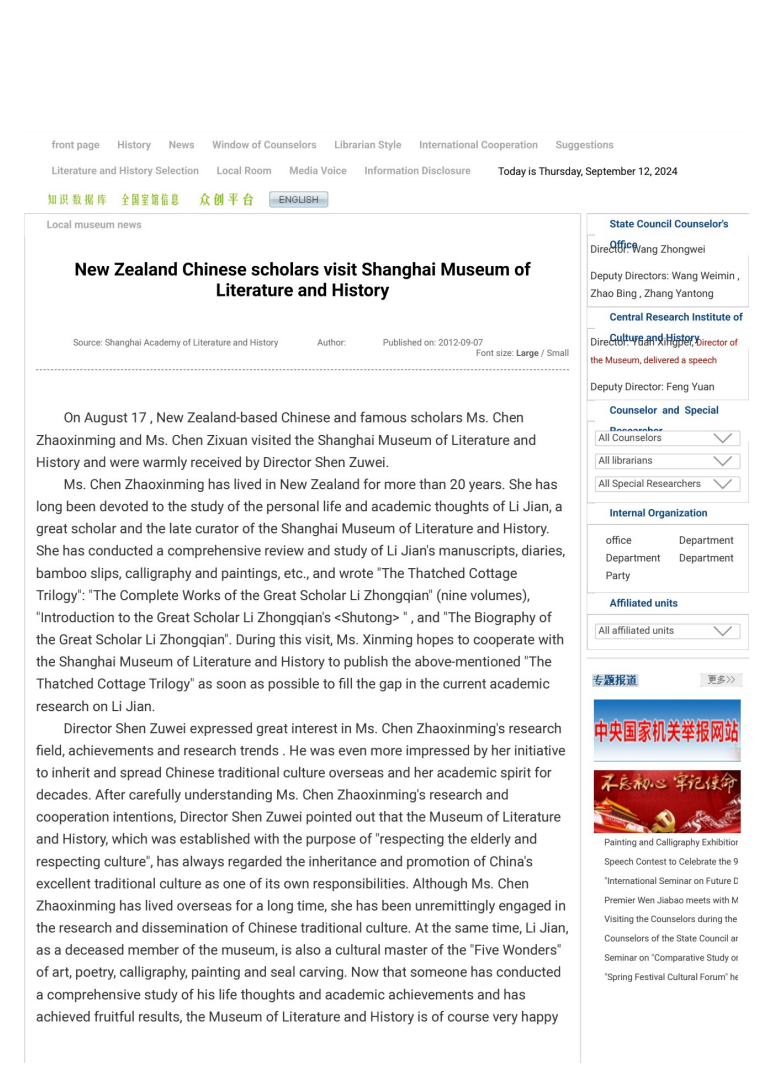
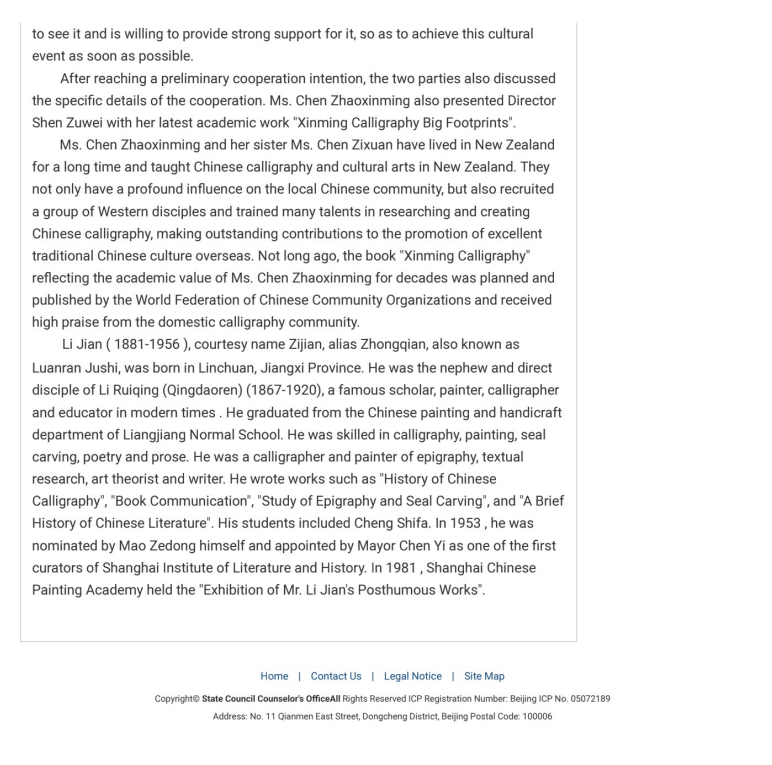
Footprints of Great Masters – Xinming’s Research on Chinese Calligraphy, Book 1 (2011)
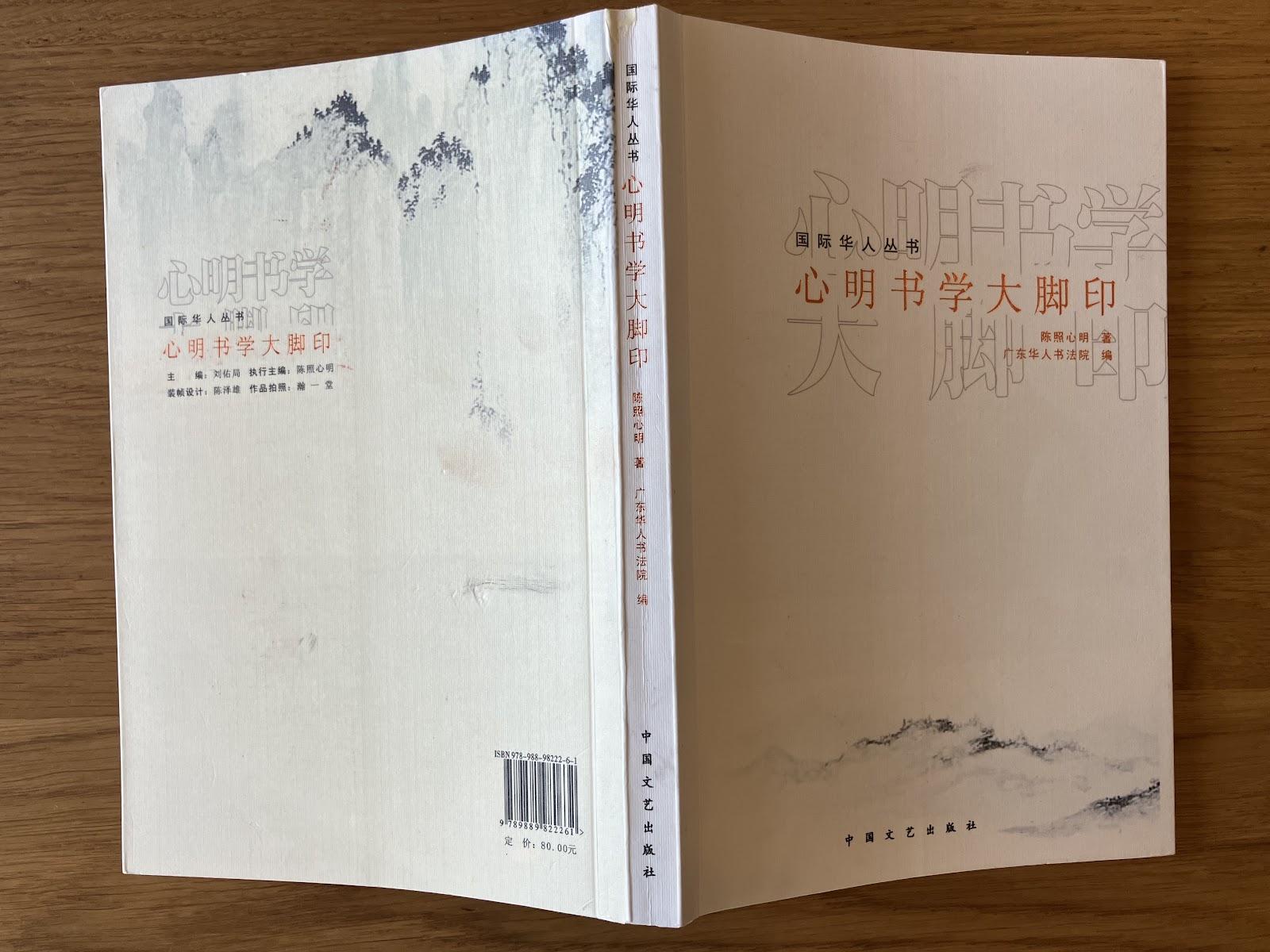
Chen, Xinming. Footprints of Great Masters – Xinming’s Research on Chinese Calligraphy, Book 1, China Literature & Art Press, 2011
This book is collected by: Tsinghua University Library (click link to see details)
Xinming is a thoughtful person. She has lived in New Zealand for more than 20 years and has been tirelessly pursuing the source of Chinese calligraphy. She has dug a new land for calligraphy research with the vision of a scholar. She taught Chinese calligraphy and cultural arts in New Zealand, which not only had a profound impact on the Chinese community, but also recruited many Western students and cultivated a batch of foreign talents in researching and creating Chinese calligraphy. Therefore, her contribution goes beyond the general significance. In her decades of calligraphy research, she used philology, archaeology, philosophy and classics to write “Xinming’s footprints on Calligraphy ” to pass on the heart seal of calligraphy culture and art tradition. After thousands of miles, she sent the manuscript to me and entrusted me to publish it in China. I feel that this is a wonderful book of calligraphy theory. The new viewpoints she put forward will surely have a profound inspiration for the study of Chinese calligraphy. Guangdong Chinese Calligraphy Academy is willing to do its utmost to do some useful work for the publication of “Xinming’s footprints on Calligraphy ” and also include it as one of the series of “International Chinese Series”.